Stop re-typing data between systems.
We connect the platforms you already run on — ERPs, CRMs, Shopify, payments, fulfilment, analytics — and turn the manual steps between them into automated workflows that run whether or not anyone remembers to press the button.
You're probably here because…
These are the situations teams are usually in when they come to us about integrations & automations. If more than one lands, we should talk.
- The same order data lives in three systems and none of them agree.
- Someone exports a CSV every morning so another system can import it.
- A legacy ERP runs the business and nobody wants to touch it.
- Trading partners want EDI and you're handling it by hand.
- Integration failures get discovered by customers, not by alerts.
The work, spelled out
No mystery line items. This is what we deliver and what you get to keep.
API integration
Third-party and internal systems connected properly — authenticated, rate-limited, and resilient to the other side's downtime.
ERP, CRM & fulfilment connections
The systems of record wired into the systems your customers touch, including ones far older than the web.
EDI & SFTP pipelines
Trading-partner document exchange — parsed, validated, and acknowledged without anyone opening a file.
Data sync & migration
One-time migrations and continuous syncs, with reconciliation so you can prove both sides match.
Workflow automation
The repetitive multi-step processes your team runs by hand, turned into jobs that run on schedule.
Monitoring & alerting
Every run logged, every failure alerted, and a retry path that doesn't involve someone starting over.
How this looks in practice
Bridging an ERP that predates the API era
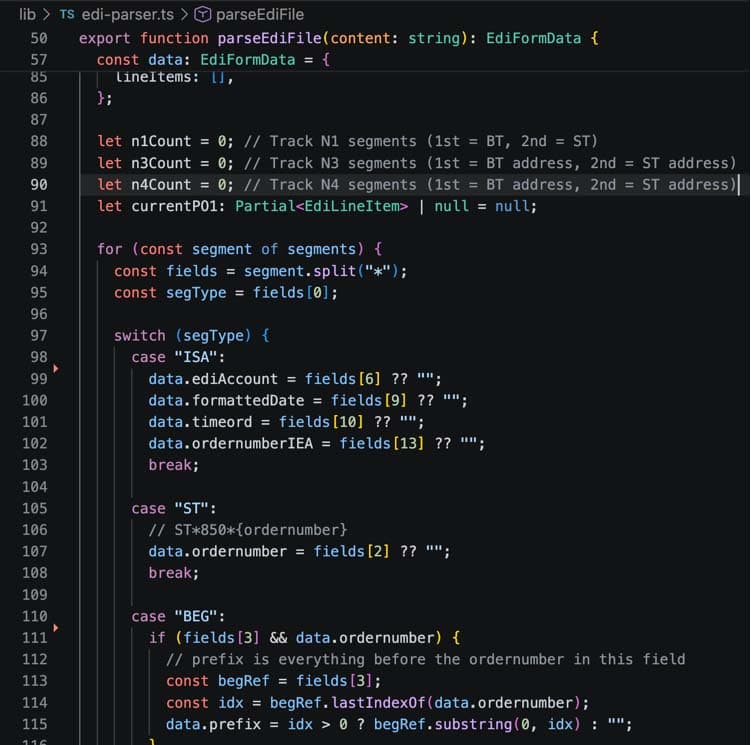
360 Athletics runs on Adagio, an ERP with no modern API. Rather than replace a system the business depends on, we built the bridge: automated EDI over SFTP, parsed and validated, moving orders and inventory between the ERP and Shopify. The ERP stayed. The manual re-keying didn't.
- Automated EDI generation and parsing
- SFTP exchange with trading partners
- Orders and inventory synced both ways
- The legacy system kept, not ripped out
Automations you can watch
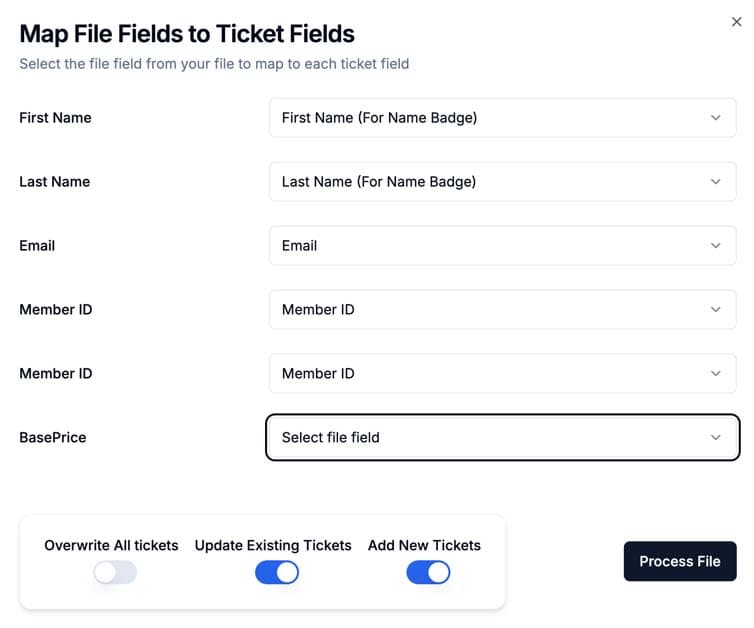
Automation that nobody can inspect is a liability. Ours ship with configurable field mapping, a visible run history, and alerting on failure — so your team can see what ran, what it changed, and what to do when an upstream system returns something unexpected.
- Configurable field mapping, changeable without a deploy
- Run history with what changed and when
- Alerts the moment something fails
- Replay a failed run once the cause is fixed
What we do differently here
The choices that decide whether this kind of work holds up a year later.
- 1
Map the data flow on one page
Systems, direction, and source of truth for each field — before any code. Most of the hard decisions live here.
- 2
Make it idempotent and replayable
Runs that can safely repeat, and failures you can replay after a fix instead of reconstructing by hand.
- 3
Alert on failure, log every run
Silent automation is the dangerous kind. You should learn about a problem from us, not from a customer.
- 4
Hand over the runbook
Documented behaviour, failure modes, and recovery steps — so your team isn't dependent on us to understand it.
What we build it with
Every tool here earned its place. The point isn't the logos — it's the reasoning behind them.
The document standard trading partners still run on — generated and parsed without manual handling.
How those documents actually move. Unglamorous, and still the backbone of wholesale.
A legacy ERP with no modern API — proof that 'it can't integrate' usually means 'nobody has built the bridge'.
 Shopify
Usually one end of the pipeline: orders out, inventory and pricing in.
 Next.js
Hosts the dashboards, webhook endpoints, and scheduled jobs in one deployable application.
 TypeScript
Typed contracts at every system boundary — where integrations break most often.
 PostgreSQL
Run history and reconciliation data, so every sync can be audited after the fact.
 Prisma
Keeps the sync layer honest about the shape of the data it's moving.
 Resend
Transactional alerts and reports that reach a person when a run needs attention.
Event and attendee data pulled in automatically instead of exported by hand.
Work we've shipped
The same capability, already delivered for someone else.
360 Athletics Automations Dashboard
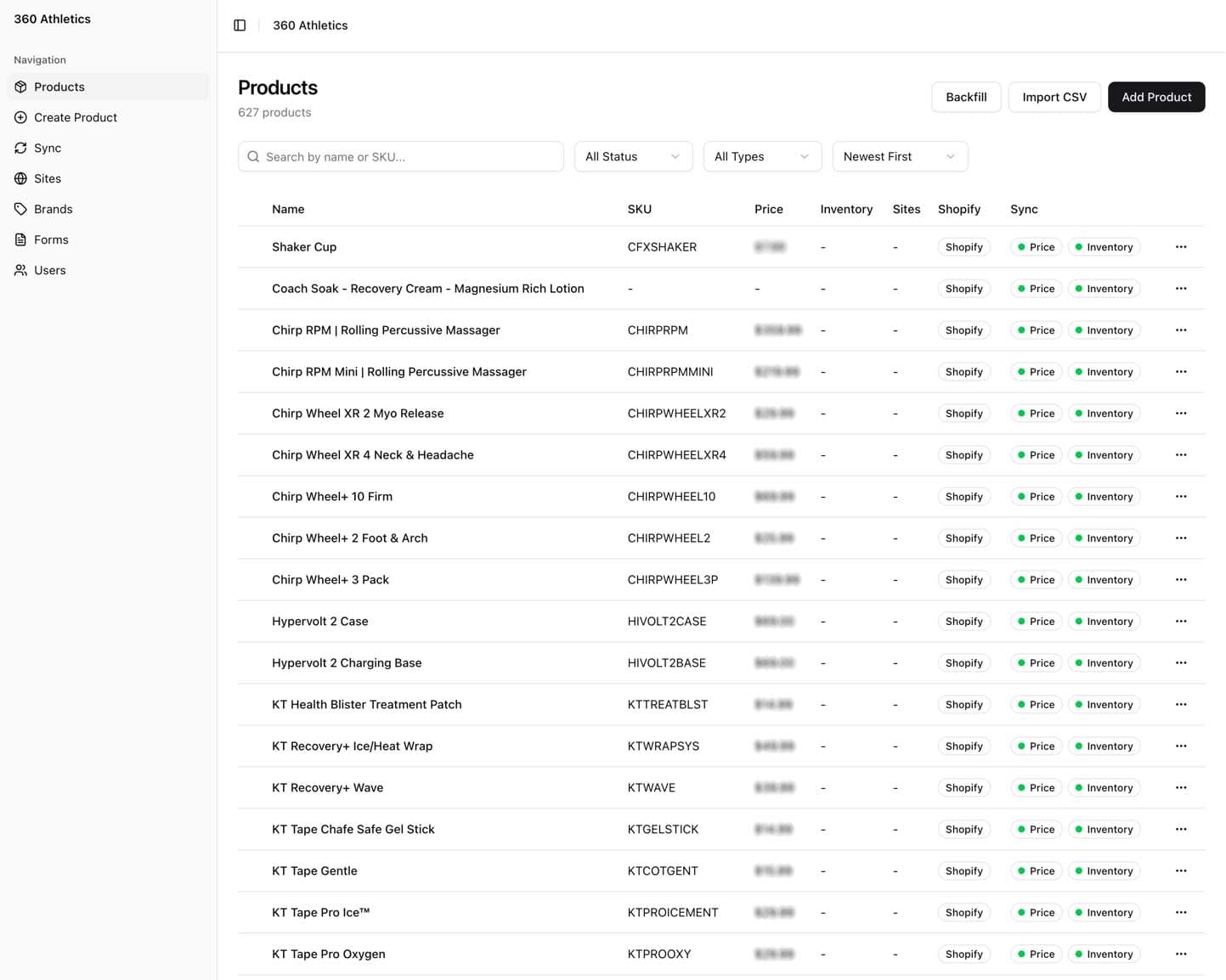
We built 360 Athletics an automations dashboard that runs every Shopify store from one place. Syncing products, pricing, and inventory, and bridges their legacy Adagio ERP with automated EDI order delivery.
Hip Haus Check-in App
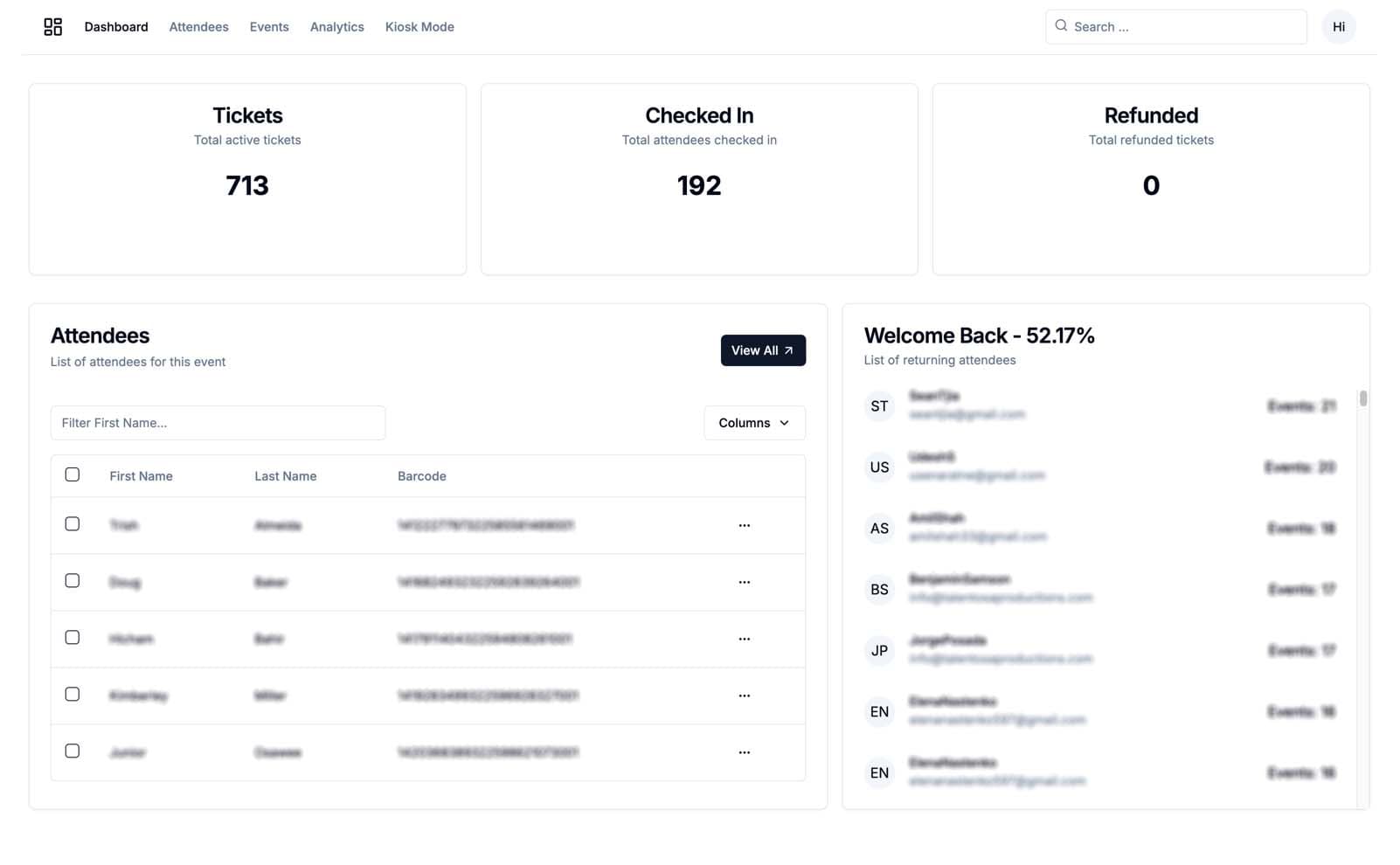
We built Hip Haus a two-part check-in system. A web app and a native Android scanner that makes event entry a single QR scan and turns every guest into real-time business intelligence.
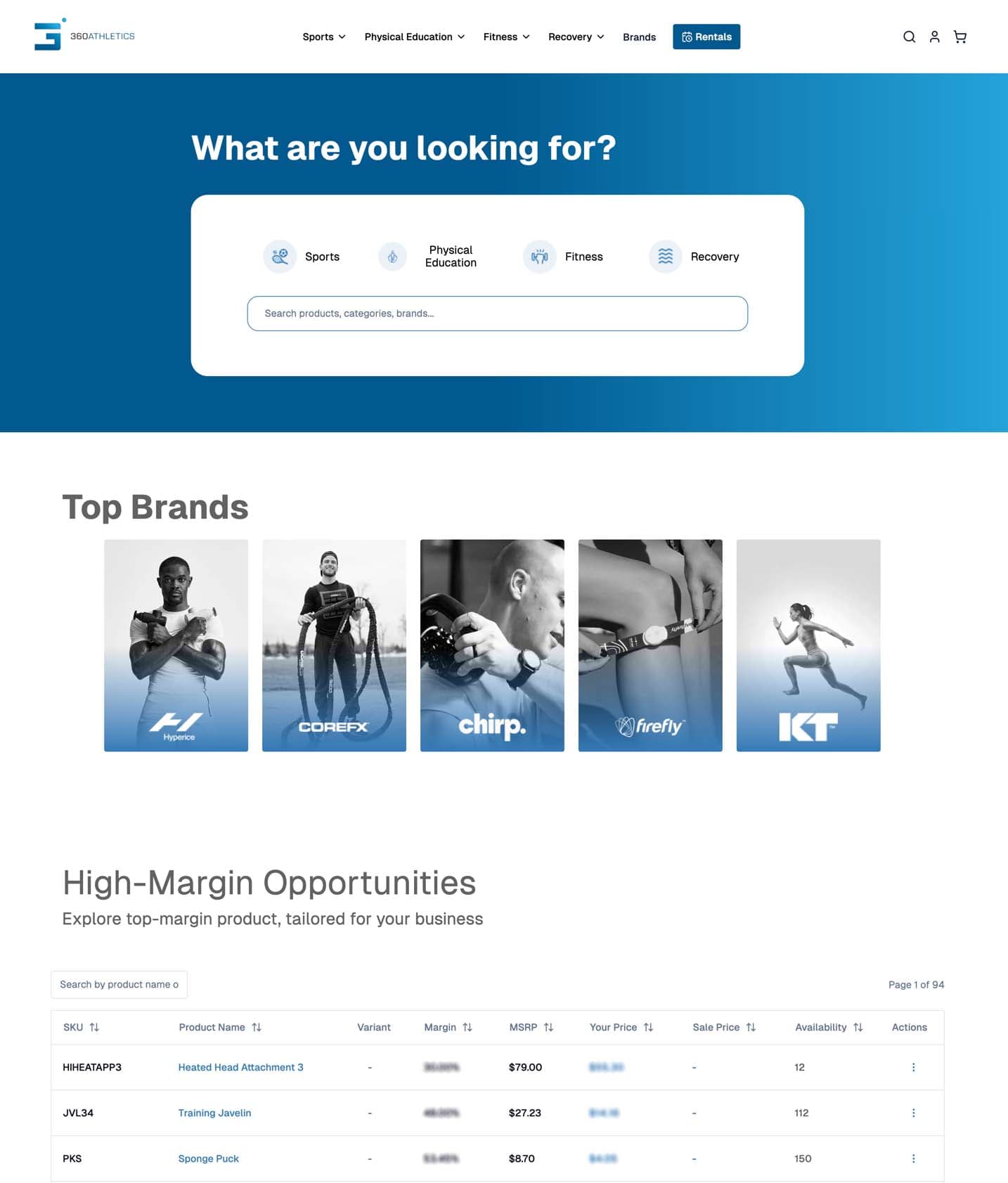
360 Athletics Dealer Portal
We built 360 Athletics a custom dealer portal for their wholesale and distribution business, handling dealer pricing, backorders, purchase orders, and a full medical-device rental operation, all wired into their legacy ERP.
Three ways we take on the work
Which one fits depends on the project — we'll recommend a shape after a discovery conversation, not before.
Project-based
A defined scope, an agreed timeline, and a fixed quote. We scope it after discovery, so the number means something.
Best forOne integration, clearly defined.
Ongoing retainer
A recurring block of our time each month for continuous work — improvements, support, and whatever the roadmap needs next.
Best forA growing set of automations and the monitoring around them.
Time & materials
Billed for the time the work actually takes. Best when the scope will genuinely move as we learn.
Best forLegacy systems where the unknowns are the work.
Integrations & Automations, specifically
The questions teams ask us most about this kind of work.
The rest of what we do
Most projects touch more than one of these. We cover the whole build.
What's the manual process costing you?
Walk us through it — most of them are a few weeks of work and then gone for good.